
The Farmhouse Table: Dinner Party Florals
There are few things better than getting to host a dinner party. From thoughtfully planning a menu, setting the table, lighting candles, arranging flowers, and inviting guests into your home, each element of a dinner party is special yet versatile, allowing you to express your own style. Arranging flowers for your dinner party can seem daunting, but farm fresh flowers add the perfect touch of nature’s beauty to your evening. The good news is that turning these flowers into beautiful arrangements on your table doesn’t require much. All you need is to buy and prepare your flowers well, and have the right formula for arranging. Here’s exactly how to do it, from the farmers market to the table.
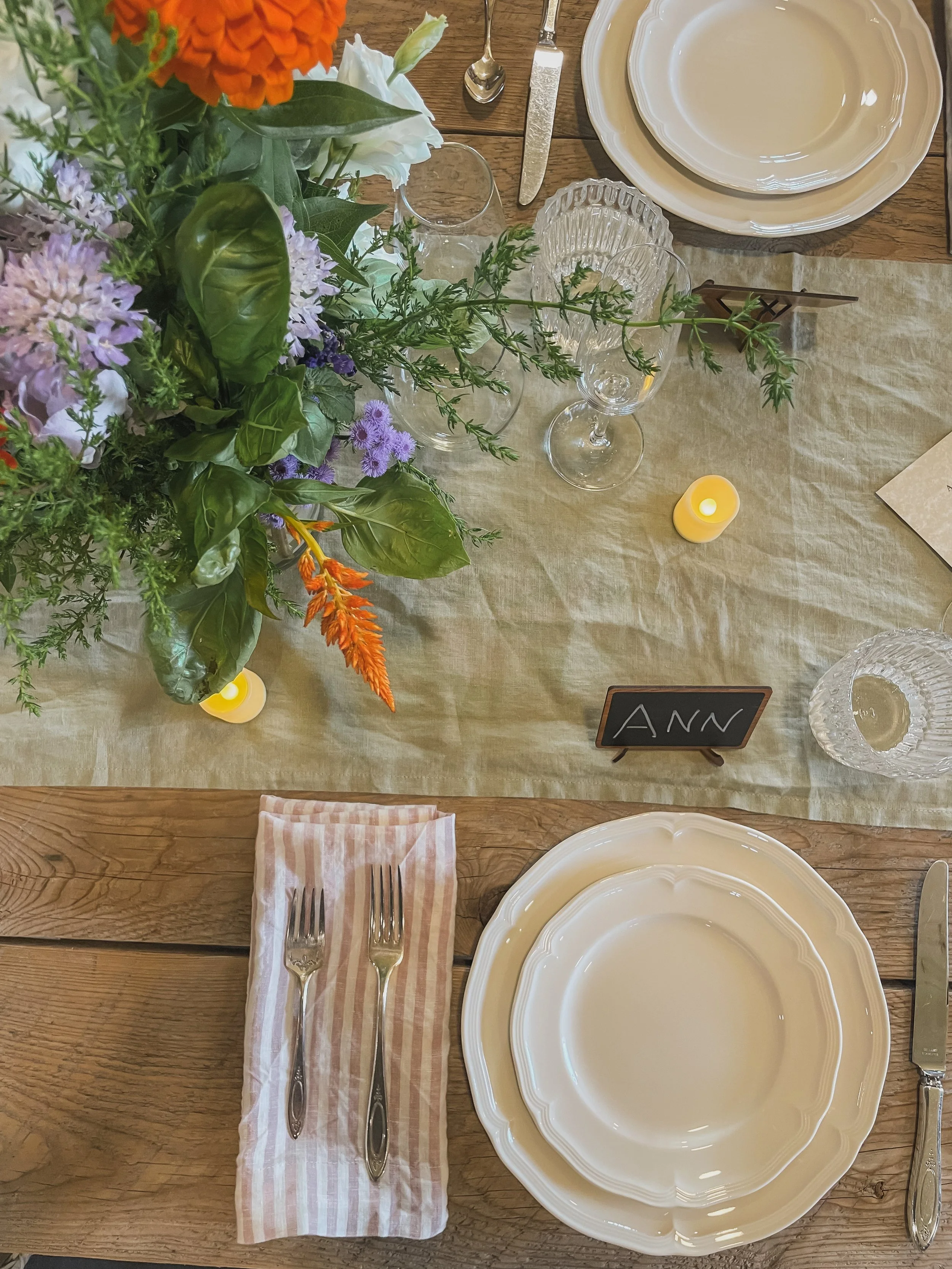
Step 1: Buy the right amount of the right things
Head to the farmers market (or your own garden) with an open mind rather than a shopping list. Farm flowers are seasonal and sometimes unpredictable, so what's beautiful one week may be gone the next. Generally though, through each season you can find a pretty consistent supply from the types of flowers in season, so you may already know what to expect at the farmers market. The smartest approach is to see what's abundant and build around that.
What to look for:
One "main" flower in good supply: something that stands out and has a real presence, like dahlias, zinnias, sunflowers, tulips, or peonies depending on the season. Buy generously; this is what carries the arrangement and makes it stand out.
One or two supporting flowers in a smaller quantity: cosmos, snapdragons, stock, or anything with a different shape than your main flower, to add variety without adding chaos.
Foliage and filler — whatever herbs, grasses, or greenery are on hand. Mint, dill, fennel, and flowering herbs all work beautifully and often cost next to nothing.
How much to buy: For a dinner table with 3–5 small arrangements running down the center, plan on roughly 15–20 stems total of your main flower, plus 8–10 stems each of your supporting flowers, plus a generous handful of greenery. It sounds like a lot, but split across several small vessels, it goes quickly.
Step 2: Condition the flowers the moment you get home
This is the step people skip, and it's the one that makes sure your flowers stay fresh and hydrated through your dinner party and for days to come. Remember, flowers aren’t supposed to last forever, that’s part of their beauty, but there are a few things you can do to get the most out of them!
Re-cut every stem at a 45-degree angle, about an inch from the bottom. Cutting at an angle exposes more surface area for water absorption. Use sharp scissors or garden snips, not dull kitchen shears, which crush the stem.
Strip lower leaves. Remove any leaves that would sit below the waterline once the stem is in a vase. Submerged leaves rot quickly and cloud the water, which shortens the life of everything else in it.
Get them into water immediately, ideally in a clean bucket or vase filled with cool water. Let them sit somewhere cool and out of direct sunlight for at least an hour (longer if you have the time) before arranging. This is called conditioning, and it lets the stems fully hydrate before you cut them again and ask them to hold a shape.
If you're arranging the night before the party, condition the flowers as soon as you get home, then arrange the next morning for the freshest possible result. Farm flowers generally look their best and finish blooming over the course of the first few days after you buy them, so buying and conditioning a day or two before, then arranging close to the event, is the sweet spot.
Step 3: Choose your vessels
Skip the single large centerpiece. For a dinner table, several small vessels running down the middle look better, let guests see each other across the table, and are far more forgiving if you don't have a huge quantity of flowers.
Raid your kitchen before buying anything. Depending on the setting, you can use mason jars, small pitchers, ceramic pieces, and of course any small vases. Aim for pieces that feel like they belong to the same family; all glass, or all ceramic, or all a similar vintage, even if the shapes vary. Three to five vessels of slightly different heights, spaced with a little breathing room between them, is the ideal setup for a standard dinner table.
Step 4: Build the arrangement, one layer at a time
Work directly at the table or somewhere you can step back and check the angle guests will actually see it from. Building in layers, rather than jamming everything in at once, makes the process much easier.
Start with greenery. Place your foliage and herbs first, letting a few pieces drape over the edge of the vessel. This creates the frame the flowers will sit inside.
Add your supporting flowers next. Place them at varied heights and angles; don't line them up evenly. Let some lean toward the vase rim rather than standing straight up.
Finish with your main flower. This is your showpiece, so place it last and give it the most visible, central position in each vessel. A few stems per jar is usually enough.
Turn the vessel as you go. Rotate it a quarter turn every few stems and check all sides.
Cut stems short. As a general guide, the flower and stem together should be about one and a half times the height of the vessel, and often less for a low, relaxed look. Don't be afraid to cut more than feels natural; shorter stems settle better and look more intentional in a small vessel.
Resist perfecting it. The goal is a bouquet that looks like it gathered itself, not one that looks gridded and precise. If a stem is leaning slightly, let it lean.
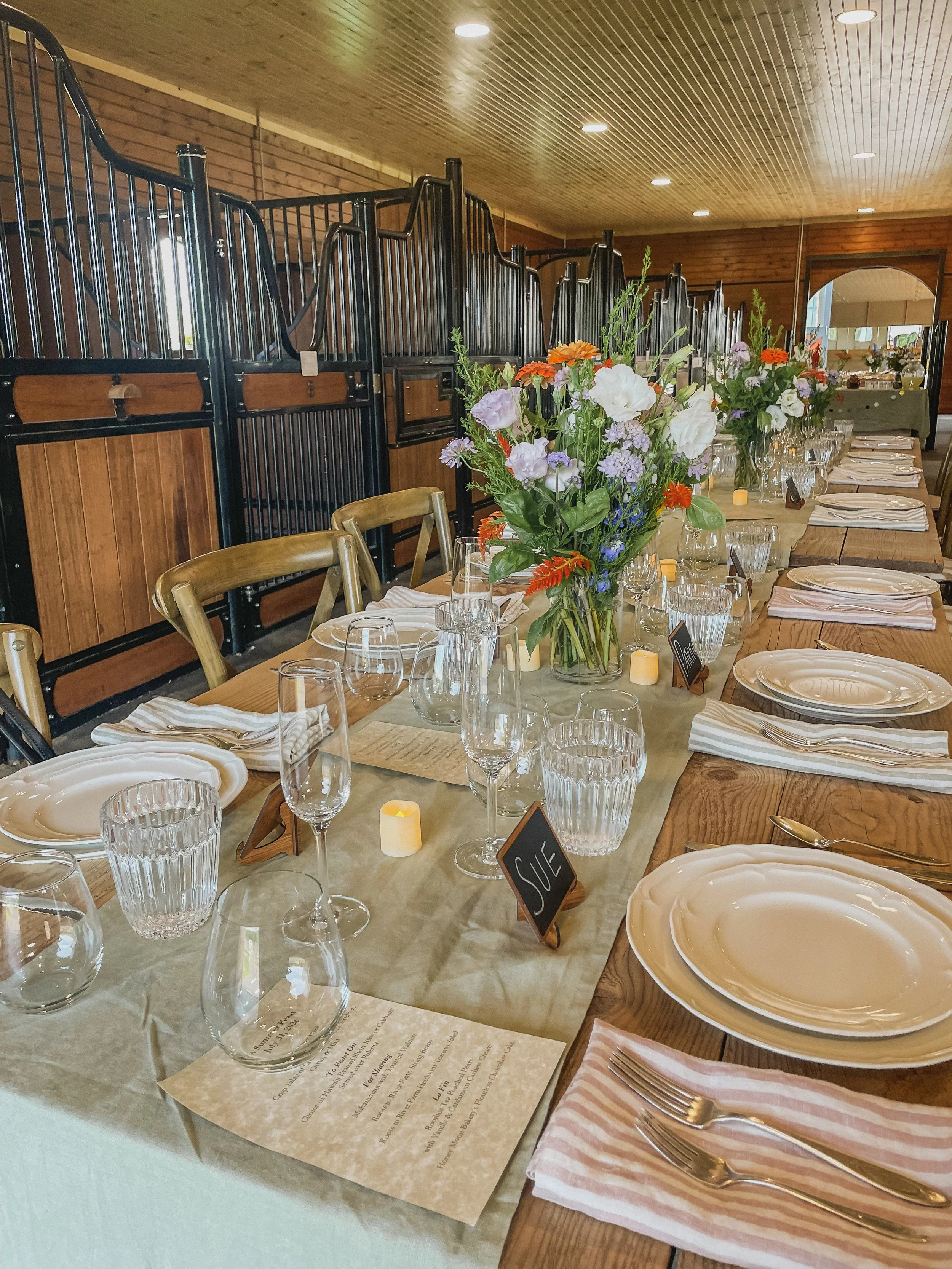
This was a dinner party our flower team recently made arrangements for!
Step 5: Place the arrangements and layer in a few extra touches
Once your vessels are filled, arrange them down the center of the table with gaps between clusters, rather than one even line. This leaves room for serving dishes and candles, and looks more natural.
A few finishing touches that take very little extra flowers:
A single stem at each place setting, laid across the plate or tucked into a folded napkin.
Loose petals or a few short herb sprigs scattered near the base of candles or between vessels.
A stem or two in the bathroom or entryway, so the feeling of the table carries into the rest of the space.
No matter what kind of dinner party you’re hosting, having fresh flowers on your table makes your space feel elegant, welcoming, and intentional, inviting each guest to be comfortable and present throughout the evening. It doesn’t take much to elevate your dinner party, but the personal touches make all the difference.
-Alyssa at Grand Cru Farm
